

SO₂ Removal ≥95%
Stable desulfurization performance for industrial flue gas emission control.
For Low- to Medium-Temperature Industrial Flue Gas Desulfurization
Bamboo-based porous carbon support combined with dedicated catalytic components for efficient flue gas desulfurization.
Designed for industrial flue gas at 40–180°C, with SO₂ removal ≥95% and sulfuric acid mist removal ≥90%, and supports in-situ regeneration for repeated use.
Stable desulfurization performance for industrial flue gas emission control.
Stable catalytic performance across flue gas temperatures from 40 to 180°C.
Multi-stage dilute sulfuric acid rinsing enables in-situ regeneration and repeated use.
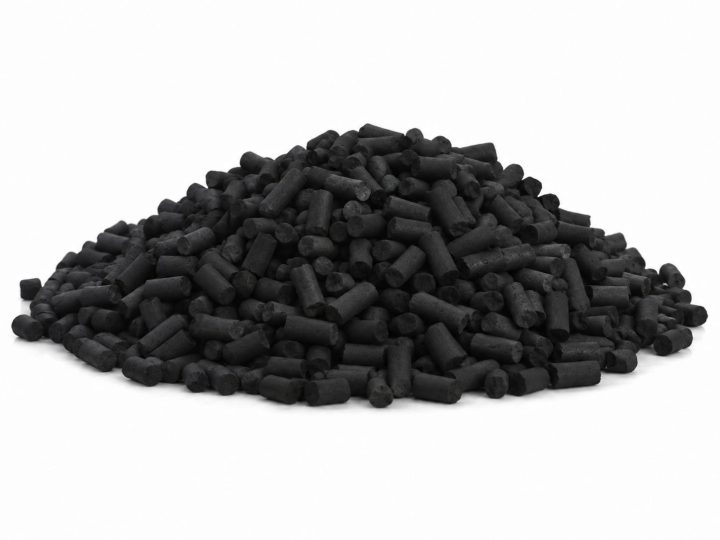
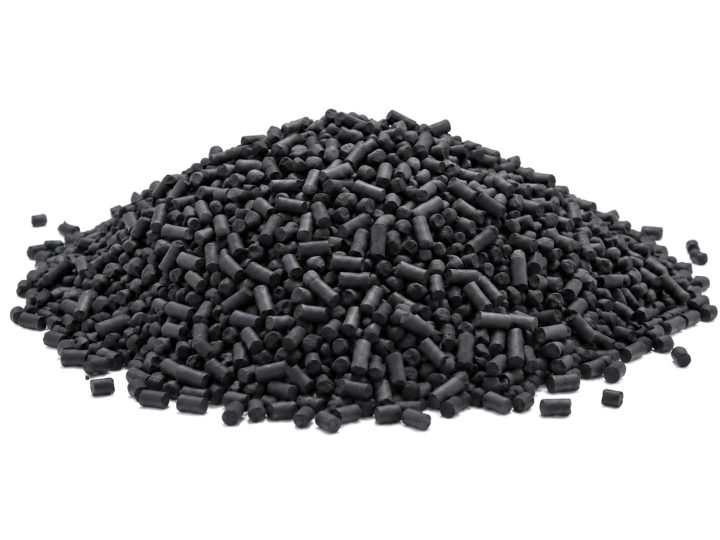
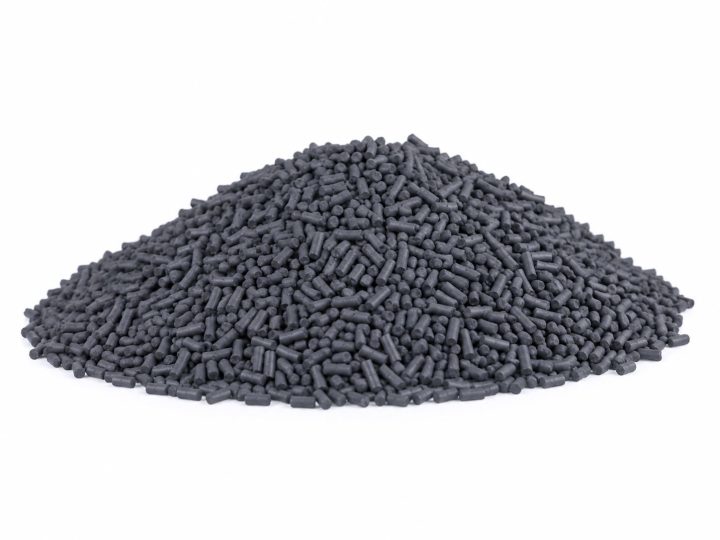
Dense, robust pellets resist breakage and attrition during loading and repeated regeneration.
DAQI Technology S-1-111 is a bamboo-based activated carbon desulfurization catalyst for 40–180°C industrial flue gas, delivering ≥95% SO₂ removal and 90% sulfuric acid mist removal. It supports in-situ regeneration for repeated use.
SO₂ is removed through four main reaction steps: ① O₂ → 2O* (oxygen activation); ② SO₂ + O* → SO₃* (catalytic oxidation); ③ H₂O + SO₃* → H₂SO₄* (hydration); ④ nH₂O + H₂SO₄* → H₂SO₄·(nH₂O) (dilution and adsorption). At lower temperatures, physical adsorption plays a larger role. As temperature increases, chemisorption becomes dominant. Abundant oxygen-containing functional groups such as –OH, C–O–C and C–O promote the conversion of SO₂ to SO₃.
The catalyst is regenerated in situ using a multi-stage dilute sulfuric acid circulation and spray process. Before regeneration, the bed is purged with nitrogen and cooled to below 60°C. Each regeneration stage should last at least 30 minutes. After regeneration, the catalyst should stand for at least 24 hours until excess water has drained and no visible dripping remains. The regenerated catalyst can then be returned to service, allowing multiple operating cycles.
The recommended inlet SO₂ concentration is below 6,000 mg/m³. For higher concentrations, upstream pretreatment such as pre-absorption or dilution is recommended to protect the catalyst and maintain stable desulfurization performance.
Service life depends on actual operating conditions, including temperature, flue gas composition and dust concentration. Under recommended conditions, the catalyst can undergo multiple regeneration cycles. When its activity no longer meets process requirements, contact DAQI Technology for replacement guidance. Do not dispose of the spent catalyst without proper technical assessment.
① Do not introduce flammable gases into the catalyst bed due to fire risk. ② Avoid organic gases or vapors that may block pores and reduce catalyst activity. ③ Minimize dust ingress to prevent pore blockage. ④ Continuously monitor bed temperature and provide an emergency spray system to prevent overheating. ⑤ During shutdown, do not expose the catalyst bed to air before it has cooled sufficiently.
① Inspect packaging integrity and quantity upon receipt. ② Store in a clean, dry location protected from moisture and foreign materials. ③ Keep away from ignition sources. Although the ignition temperature is ≥250°C, appropriate fire-prevention measures are still required. ④ Before loading, ensure the reactor is clean and free of metal debris, dust and other contaminants. ⑤ Loading should be carried out under professional technical guidance. Mechanical vibration during loading is prohibited.
Please complete the form and our team will contact you shortly.