


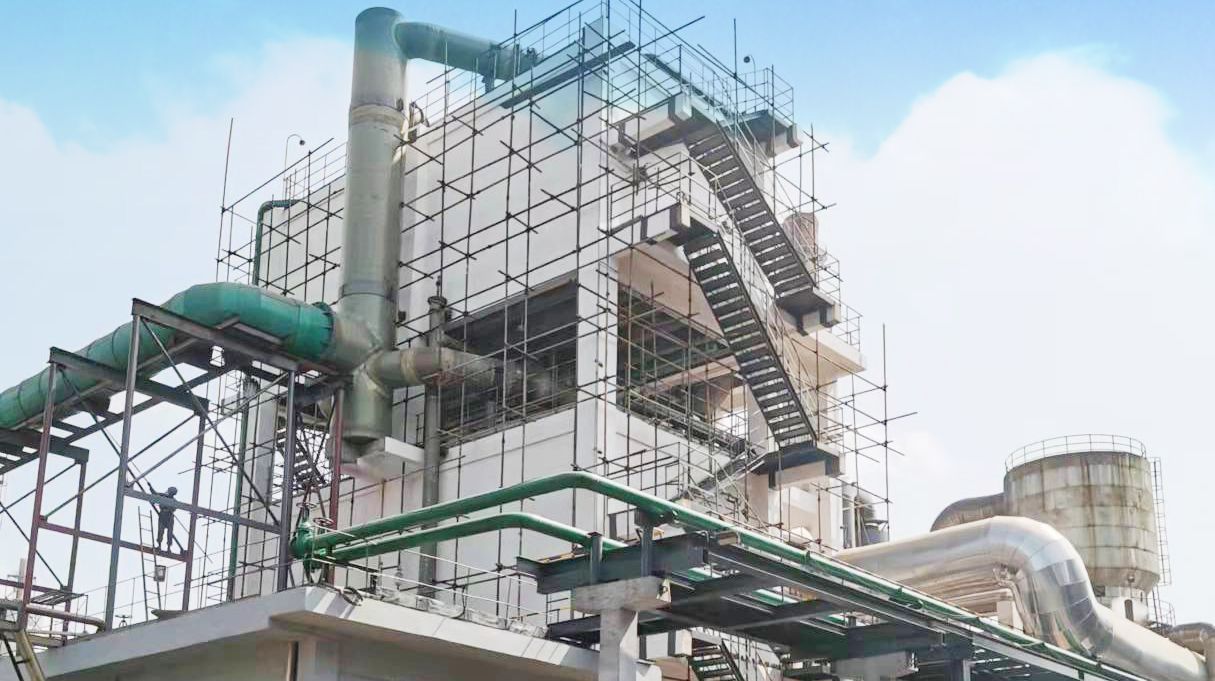
Project Overview
Longbai Sichuan Titanium operates a 200,000 t/y sulfuric acid production line. The process generates tail gas containing residual SO₂, sulfuric acid mist and particulate matter.
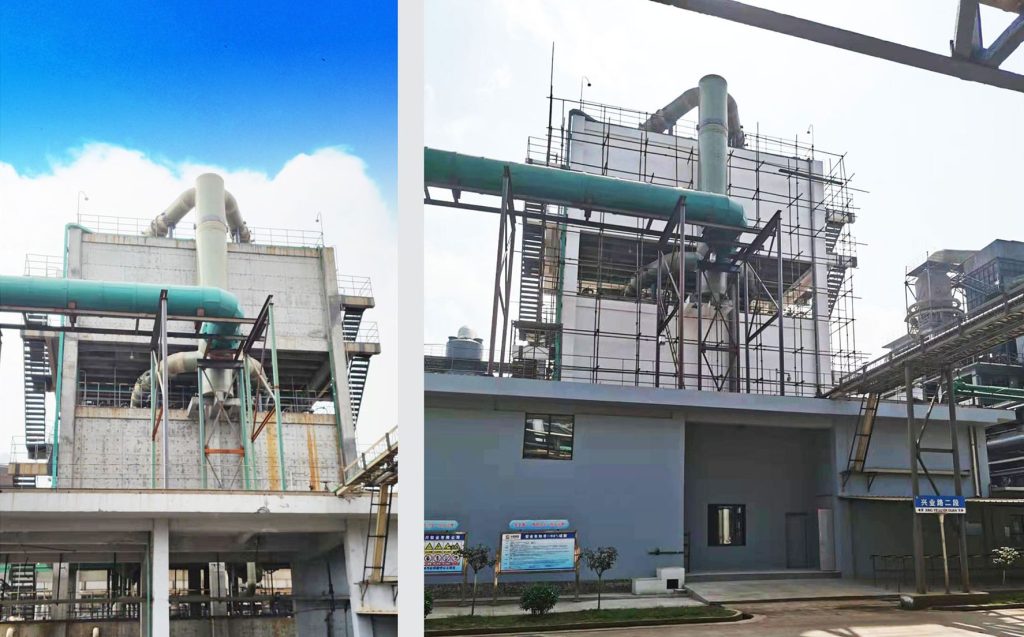
A deep desulfurization and mist-removal system was added downstream of the existing sulfuric acid process to further reduce these emissions.
DAQI Technology designed the treatment system around the actual gas flow, temperature, SO₂ concentration and acid mist conditions at the plant.
The system is designed to handle up to 85,000 Nm³/h of tail gas at approximately 60–85°C. After treatment, SO₂ is maintained below 30 mg/Nm³, sulfuric acid mist below 5 mg/Nm³, and particulate matter below 10 mg/Nm³.
Design Conditions
| Parameter | Design Value |
|---|---|
| Industry | Titanium dioxide / Sulfuric acid |
| Sulfuric acid capacity | 200,000 t/y |
| Gas flow | ≤85,000 Nm³/h |
| Gas temperature | 60–85°C |
| Typical desulfurization inlet temperature | Approx. 70–80°C |
| Overall DCDA conversion | ≥99.7% |
| SO₂ at desulfurization inlet | ≤2,000 mg/Nm³ |
| Acid mist, expressed as SO₃ | ≤40 mg/Nm³, max. 80 mg/Nm³ |
| Oxygen | Approx. 8% |
| Particulate matter | ≤30 mg/Nm³ |
| Residual pressure at second absorber outlet | >150 mmH₂O |
Operating Data
Under normal plant operation, the SO₂ concentration entering the deep desulfurization system is typically below 800 mg/Nm³.
Gas moisture is maintained below 3%, while oxygen concentration is generally around 5–7%.
After treatment:
- SO₂: <30 mg/Nm³
- Sulfuric acid mist: <5 mg/Nm³
- Particulate matter: <10 mg/Nm³
At an inlet SO₂ concentration of 800 mg/Nm³, the corresponding removal efficiency is above 96%.
The 2,000 mg/Nm³ figure is the design inlet condition, while 800 mg/Nm³ represents a typical operating condition. They refer to different operating cases.
Tail Gas Treatment Requirements
Although the sulfuric acid plant uses a double-contact, double-absorption process with an overall conversion efficiency of at least 99.7%, a small amount of SO₂ remains in the final process gas.
Sulfuric acid mist is also present in the tail gas.
For this reason, the final treatment stage has to deal with more than SO₂ alone. Gas flow, temperature, acid mist, particulate loading and pressure loss all have to be considered when the desulfurization system is integrated with the existing acid plant.
At this site, the maximum design gas flow reaches 85,000 Nm³/h. Stable gas distribution and pressure control are therefore important, particularly during continuous operation and changes in production load.
Project Performance
The system keeps outlet SO₂ below 30 mg/Nm³ during normal operation, while sulfuric acid mist is controlled below 5 mg/Nm³ and particulate matter below 10 mg/Nm³.
For this type of sulfuric acid tail gas application, the main challenge is not simply achieving a high SO₂ removal percentage. The treatment system also has to remain stable when gas flow and inlet conditions change and when SO₂, acid mist and particulate matter are present at the same time.
The project provides operating experience for similar tail gas treatment applications in sulfuric acid production, titanium dioxide manufacturing, non-ferrous metallurgy and other sulfur-containing industrial processes.
Key Figures
200,000 t/y
Sulfuric acid production capacity
≤85,000 Nm³/h
Design gas flow
SO₂ <30 mg/Nm³
Outlet concentration
Acid mist <5 mg/Nm³
Outlet concentration
Particulate matter <10 mg/Nm³
Outlet concentration
Comments