


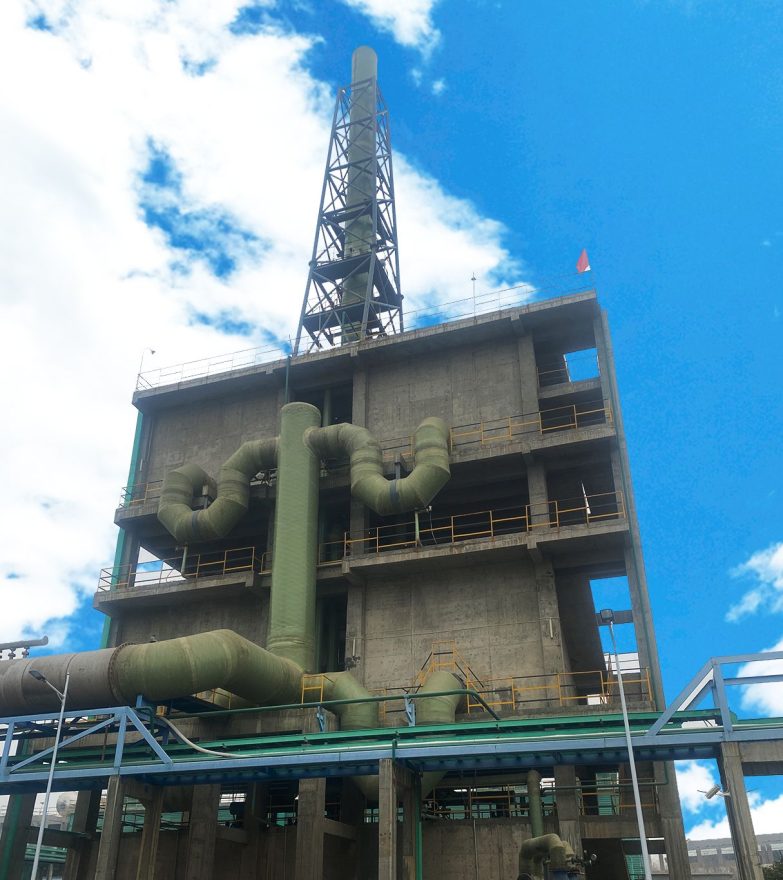
Project Overview
Hubei Shilong Chemical operates a 300,000 t/y sulfuric acid plant using pyrite as the sulfur-bearing feedstock.
The tail gas treatment system is designed for a gas flow of 90,000 Nm³/h. At the treatment inlet, SO₂ can reach 1,500 mg/Nm³ and sulfuric acid mist is also present, with its concentration changing according to upstream plant conditions.
The system was designed around full-load operation of the acid plant rather than a single fixed gas condition.
Design Conditions
| Parameter | Design Value |
|---|---|
| Feedstock | Pyrite |
| Production capacity | 1,000 t/d |
| Annual sulfuric acid capacity | Approx. 300,000 t/y |
| Inlet gas flow | 90,000 Nm³/h |
| Acid plant conversion efficiency | ≥99.5% |
| Inlet SO₂ | ≤1,500 mg/Nm³ |
| Inlet sulfuric acid mist | Trace to 150 mg/Nm³, average ≤100 mg/Nm³ |
| Oxygen | 5–6% |
| Inlet gas temperature | 65°C |
| Inlet pressure | 200 mmH₂O (G) |
| Normal make-up water | 2.0 t/h |
| Plant load | 100% |
| Operating schedule | 24 h/day, approx. 8,000 h/year |
The ≥99.5% figure refers to the SO₂ conversion efficiency of the sulfuric acid process, not to the removal efficiency of the downstream tail gas treatment system.
Tail Gas Conditions
The treatment system receives up to 90,000 Nm³/h of process gas during full-load operation.
SO₂ at the inlet is designed at no more than 1,500 mg/Nm³. Sulfuric acid mist varies more widely, from trace levels to approximately 150 mg/Nm³, with an average design value below 100 mg/Nm³.
The inlet gas temperature is around 65°C, oxygen content is normally 5–6%, and available pressure is approximately 200 mmH₂O (G).
For a retrofit or downstream polishing system, these values matter together. Gas flow, acid mist loading, available pressure and continuous operating hours all influence the final equipment configuration.
Pyrite-Based Sulfuric Acid Tail Gas
Pyrite-based sulfuric acid production has a different upstream process from sulfur-burning acid plants.
Pyrite is roasted to generate an SO₂-rich process gas, which then passes through gas cleaning, catalytic conversion and absorption before the remaining tail gas reaches the final treatment stage.
Even with an acid plant conversion efficiency above 99.5%, residual SO₂ and sulfuric acid mist can still remain in the final gas stream.
The downstream treatment system therefore acts as a polishing stage after the main sulfuric acid process. It does not replace the conversion and absorption sections of the plant.
Continuous Full-Load Operation
The project was designed for 100% plant load, with continuous operation for approximately 8,000 hours per year.
At this operating rate, the tail gas system has to run as part of the production process rather than as an intermittent environmental unit.
Pressure loss, gas distribution and equipment condition are therefore important. Excessive resistance in the treatment system can affect the upstream acid plant, particularly where the available gas pressure is limited.
For this reason, treatment capacity and system resistance have to be considered together from the beginning of the design.
SO₂ and Acid Mist
Sulfuric acid tail gas contains pollutants in more than one form.
SO₂ is present as a gas, while sulfuric acid mist consists of fine acidic droplets or aerosols. Acid mist loading can change with operating conditions in the conversion and absorption sections.
At the Hubei Shilong site, the inlet acid mist concentration can vary from trace levels to around 150 mg/Nm³.
This variation has to be taken into account when selecting materials, arranging gas flow and designing equipment for long-term operation in an acidic environment.
Key Project Data
300,000 t/y
Sulfuric acid plant capacity
90,000 Nm³/h
Design gas flow
SO₂ ≤1,500 mg/Nm³
Design inlet concentration
Acid mist up to approx. 150 mg/Nm³
Variable inlet condition
100% plant load
Design operating condition
Approx. 8,000 h/year
Annual operating time
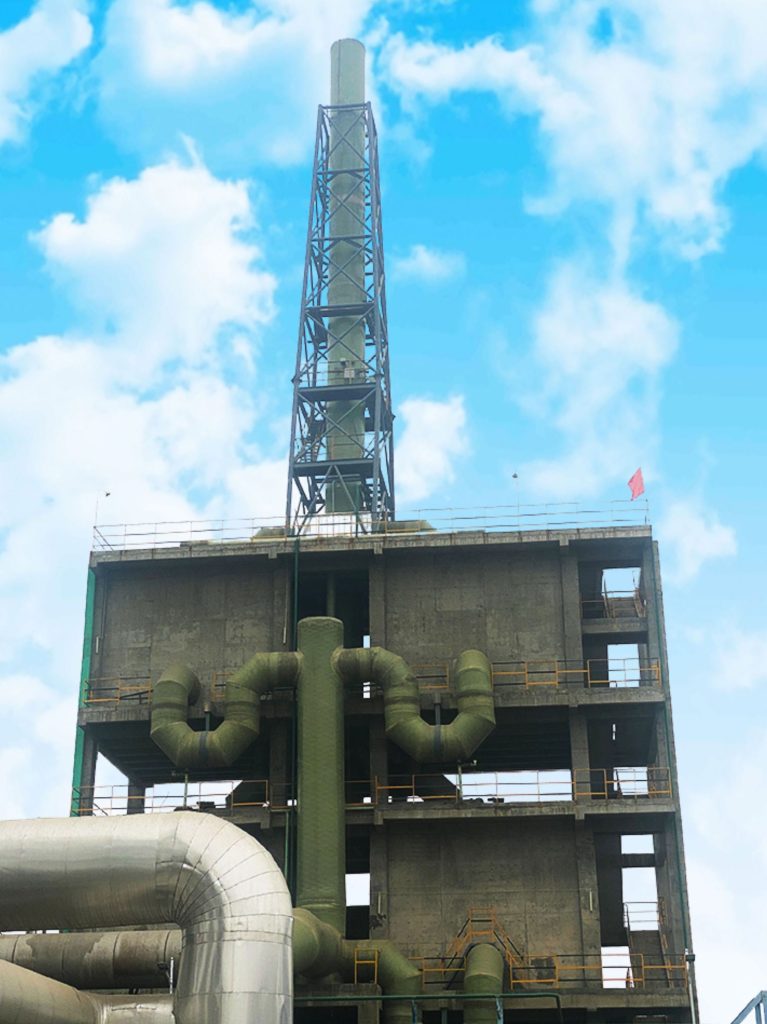
The Hubei Shilong project is a representative tail gas treatment application for pyrite-based sulfuric acid production, where a large continuous gas stream contains both residual SO₂ and sulfuric acid mist.
The same operating issues are commonly encountered in pyrite-based sulfuric acid plants, metallurgical acid plants and other continuous sulfur-containing process gas applications.
Comments